


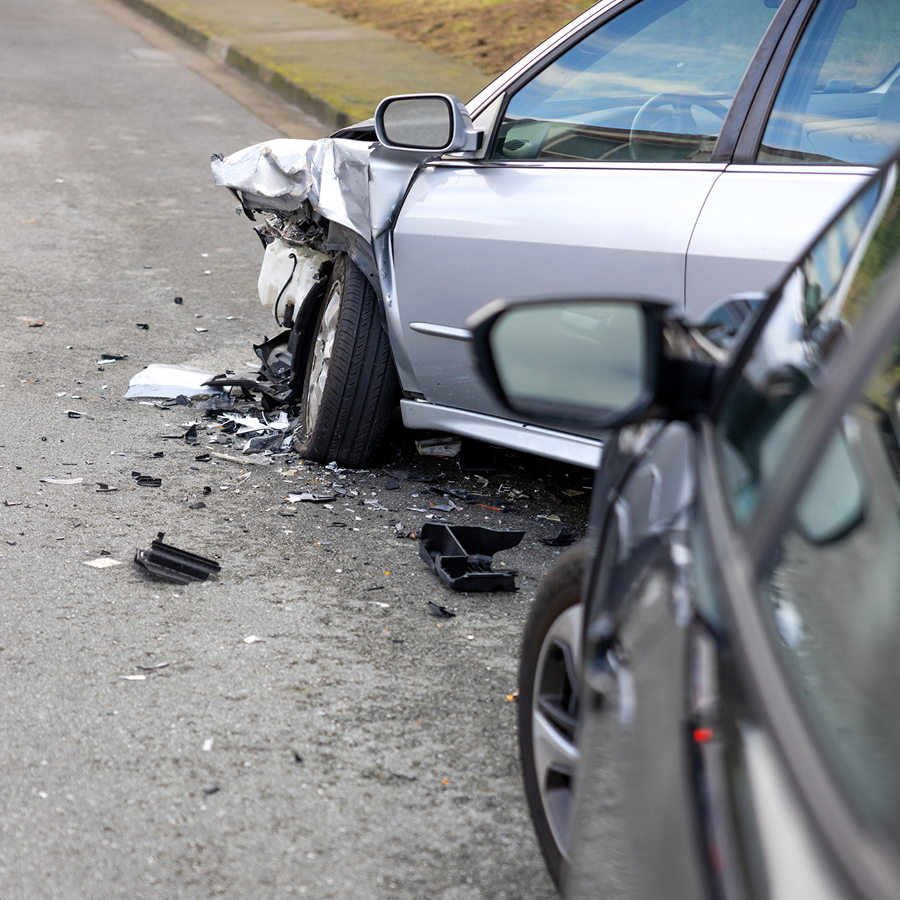
You can do everything right after a crash, call the police, go to the hospital, report the claim, only to find out the driver who hit you carries nothing more than Texas’s bare minimum insurance and the offer on the table will not even cover your hospital bill. The adjuster calls it a “policy limits offer” and makes it sound like you should be grateful. Meanwhile, the bills keep coming and your car is still in the shop or totaled.
In that situation, many Austinites are left asking the same questions. How can this be all there is if I did nothing wrong? What happens to the rest of my medical bills, my lost wages, and my pain? The stress is real, and the answers you get from an insurance company rarely explain the full picture, especially when Texas minimum insurance limits are involved.
At Smith & Vinson Law Firm, we handle injury cases across Austin and Travis County where the at-fault driver only has minimum limits. We see how quickly a single ER visit can use up a $30,000 bodily injury limit, and we know that a “policy limits offer” is not always the end of the story. In this blog, we walk you through how Texas minimum coverage actually works, why it often is not enough, and what options you may still have before you sign anything or accept any check.
What Texas Minimum Auto Insurance Limits Really Cover
Texas law requires drivers to carry a minimum amount of liability insurance, commonly written as 30/60/25. Those numbers stand for three separate limits on the at-fault driver’s policy. The first number, $30,000, is the maximum the insurer typically pays for bodily injury to any one person in a crash. The second number, $60,000, is the total the insurer generally pays for all bodily injury claims from a single accident, no matter how many people are hurt. The third number, $25,000, is the maximum the insurer usually pays for property damage per accident.
These are liability limits, which means they describe how much the at-fault driver’s insurer is potentially responsible for paying to others. They are not guarantees that every injured person will automatically receive those amounts, and they are not health insurance for you. If someone rear-ends you on I-35 in Austin and carries only 30/60/25, their insurer will evaluate your claim up to those caps and then stop. Anything above those limits usually falls on the at-fault driver personally or must be covered through other insurance.
To see how this works in the real world, imagine you are driving in Travis County, and another driver runs a red light, hitting your car and injuring you and one passenger. If that driver has 30/60/25, the most their insurer will ever pay to you is $30,000, and the most it will pay to you and your passenger combined is $60,000. At the same time, there is only $25,000 available to fix or replace your vehicle, even if your car is worth far more. In our cases, we start by getting the policy’s declarations page and any coverage confirmations, so we know exactly what limits we are dealing with before we talk about settlement.
Because we review these policies day in and day out, we see how often people misunderstand what 30/60/25 really means. Many assume that “having insurance” equals being fully covered. The reality is that Texas minimum limits are the lowest legally allowed numbers, not a safety net that automatically makes you whole after a serious crash. That is why we treat identifying coverage as the first step in any serious injury case, not the last.
How Quickly Real Injuries Can Blow Past Texas Minimum Limits
On paper, $30,000 might sound like a lot of money. In practice, Austin-area medical costs add up much faster than most people expect. An ambulance ride from a crash scene, an ER evaluation, basic bloodwork, and imaging such as X-rays or a CT scan can quickly run into several thousands of dollars. If you need to be kept overnight for observation or admitted for a few days, the hospital bill alone can reach or exceed the $30,000 per person limit, without counting any follow-up treatment.
After that initial hospital visit, many injured people need follow-up appointments with specialists, physical therapy, prescription medications, or even surgery weeks or months after the crash. Each of those services generates additional bills. On top of that, you may miss work while you recover, which means lost wages. You may need help around the house, transportation to appointments, and other out-of-pocket costs that do not show up on a hospital ledger but are very real losses to you and your family.
In a serious crash on a road like Highway 183 or MoPac, it is also common for more than one person to be hurt. If three people in your vehicle need medical care and the at-fault driver has only $60,000 total for all bodily injury claims, that $60,000 has to be divided among every injured person who makes a claim. In a multi-vehicle pileup, there may be even more injured claimants sharing that same $60,000 accident limit. It is easy to see how even relatively short hospital stays and rehab plans can use up the available coverage quickly.
On top of the medical bills, Texas law allows injured people to seek compensation for pain and suffering, physical impairment, mental anguish, and future medical needs. These non-economic damages can be significant, especially when someone is left with lasting injuries. However, if you are limited to the at-fault driver’s minimum policy, it is common for the medical bills alone to use up most or all of the $30,000 per person cap, leaving little or nothing for these other very real harms. We work with medical providers and, when needed, professionals who can help estimate future costs, so we fully understand the value of a claim before talking about whether limits are enough.
What Happens When the Other Driver’s Insurance Is Not Enough
When your damages clearly exceed the at-fault driver’s policy limits, the insurance company may eventually say it is “tendering policy limits.” In plain terms, that usually means the insurer is offering to pay the maximum amount stated in its liability policy, either to one person or divided among several claimants, in exchange for a release. The adjuster might frame this as the best and only outcome, and they may urge you to accept quickly.
A “policy limits offer” generally comes after the insurer has received your medical records, bills, and other documentation showing the extent of your injuries. Once it becomes obvious that a jury could award more than the policy amount, it is in the insurer’s interest to put the full limit on the table and try to close its file. However, the insurer’s interests and yours are not the same. You need to know whether there are other sources of compensation and how accepting that offer might affect other claims.
In many cases, accepting a “policy limits offer” will require you to sign a settlement agreement and release. That document usually states that in exchange for the money, you give up any further claims against the at-fault driver and sometimes other parties connected to the crash. If you sign a broad release without understanding its scope, you may cut off your ability to pursue additional defendants or other insurers that were not even mentioned in your conversation with the adjuster.
We routinely review these proposed settlements for clients in Austin so they understand exactly what rights they are giving up and what rights they are keeping. We also look carefully at the timing. If you accept the at-fault driver’s settlement before fully exploring your own underinsured motorist coverage or before pinning down whether the driver was working for a company, you may be closing doors you did not know you had. Part of our job is to sequence these decisions so you are not forced into a corner by one insurer’s deadline.
Other Insurance That May Help When Liability Coverage Runs Out
When the at-fault driver’s liability limits are too low to cover your losses, the next question is whether any other insurance can fill the gap. One of the most important, and most overlooked, sources of additional protection is your own uninsured and underinsured motorist coverage, often abbreviated as UM and UIM. This coverage is designed for the kind of situation where the person who hit you has no insurance or not enough insurance to pay for the harm they caused.
Underinsured motorist coverage generally applies when the at-fault driver’s liability limits are less than your damages and, in some policies, less than your own UM/UIM limits. For example, suppose the other driver has 30/60/25 and you carry a higher UM/UIM limit on your own policy. If your total damages are well above $30,000, your UIM coverage may be available to pay some or all of the difference, up to your own policy limit. This is a claim you make with your own insurer, but it still requires proof of fault, proof of damages, and careful handling to avoid unnecessary denials or delays.
Other first-party coverages can also play a role. Medical payments coverage and personal injury protection, if you purchased them, can help with medical bills and certain other expenses regardless of who caused the crash. Your health insurance may cover a substantial portion of your treatment as well, although your health insurer may later seek reimbursement from any settlement. Each of these coverages has its own rules and interaction with a liability claim.
Here are some potential sources of compensation in an over-limits case:
- At-fault driver’s liability policy, up to 30/60/25 or whatever their limits are.
- Your own UM/UIM coverage, if the other driver is uninsured or underinsured and your policy includes this protection.
- Medical payments or personal injury protection on your auto policy, which may help with medical costs and certain related expenses.
- Your health insurance for treatment not covered through auto policies.
- Additional liability policies held by other responsible parties, such as an employer or vehicle owner.
We do not assume that the first policy we see is the only one that matters. In our practice, we request and review our clients’ auto insurance declarations, look for UM/UIM and MedPay, and coordinate those benefits with any recovery from the at-fault driver. Many injured people in Austin never realize they have these protections until someone sits down with their policy and explains how they work in plain language.
Finding Additional Liable Parties and Coverage After a Serious Crash
Another critical question in a low-limit case is whether the driver who hit you is the only person or business that may be legally responsible. The simplest story is that one individual made a mistake and their minimum policy is all that is available. In reality, we often find that the driver was on the job, driving for a company, or using a vehicle owned or maintained by someone else. In those situations, additional liability policies may be in play.
For example, if a delivery driver rear-ends you on an Austin surface street while making a work-related stop, their employer may share responsibility for the crash. The employer may have a commercial auto policy with much higher limits than the employee’s personal policy. Similarly, if a company owns the vehicle or a business was responsible for its maintenance and allowed it on the road in a dangerous condition, that can open additional avenues for a claim. None of this can be evaluated by looking only at the at-fault driver’s name and personal policy.
Finding these additional parties usually requires more than a quick look at the police report. We may need to examine whether the driver was in uniform, whether the vehicle had logos or commercial markings, and what they told officers or witnesses about their purpose for being on the road. Employment records, delivery logs, and vehicle registration information can all point toward a business that should be in the case. Once a business is identified as a potential defendant, we look at its insurance to see what coverage exists above and beyond the minimum limits.
At Smith & Vinson Law Firm, we make this kind of investigation part of our standard approach in serious injury cases, because we know how often an apparently simple crash turns out to involve a company behind the scenes. By carefully evaluating how and why the collision happened, we aim to hold the right parties accountable and reach the insurance that truly reflects the harm done, not just the minimum limits the driver happened to carry.
Why You Should Not Rush to Accept a Policy Limits Offer
When the adjuster tells you they are offering “all there is,” it can feel like you have no choice but to take it, especially if medical bills and collection notices are piling up. Insurance companies know you are under pressure, and in low-limit cases, they often move quickly to put a check in front of you. They may assure you that this is the best you can do and hint that hiring a lawyer will only delay payment.
The problem is that early settlement offers, even at policy limits, often arrive before anyone truly understands the full extent of your injuries. Some conditions, such as certain back and neck injuries, do not fully reveal themselves for weeks or months. Surgeries and injections may be recommended only after conservative treatment fails. If you sign a full and final release for a policy limited amount during the first few weeks after a crash, you can find yourself responsible for significant medical costs that surface later, with no avenue left to seek more from the at-fault driver.
There is also the question of other coverage and other defendants, which rarely gets a fair airing in an early adjuster conversation. If you accept minimum limits from the at-fault driver without having your UM/UIM rights evaluated or without exploring whether that driver was working for a company, you might be closing off important options. Once you sign, you typically cannot go back and say that you later discovered an employer or an additional policy that should have been included.
In our work, we focus on maximizing compensation, not just closing files quickly. That means we look beyond the initial offer, examine your medical trajectory, and dig into coverage before advising on any settlement. We understand the urgency clients in Austin feel when bills and calls from providers are coming in, so we also help communicate with hospitals, clinics, and billing departments while we assess the full picture. The goal is to put you in a position to make a fully informed decision, not a rushed one.
How an Austin Injury Lawyer Can Strengthen an Over Limits Claim
In a case where the at-fault driver only has Texas minimum insurance, the way the claim is handled can make a real difference in the outcome. An Austin injury lawyer who regularly deals with these situations can take several concrete steps that are difficult for an injured person to manage alone. Those steps start with collecting and organizing medical records and bills, documenting lost income, and building a clear picture of how the crash has affected your life, both now and in the future.
We then look beyond the obvious. That means obtaining the at-fault driver’s policy information, reviewing your auto declarations for UM/UIM and MedPay, and investigating whether any employer, vehicle owner, or other business may share responsibility. Each time we identify another potential source of coverage, we evaluate how it interacts with the existing policies and what sequence of claims will best protect your interests. Handling multiple insurers at the same time can be complex, and missteps can cost real money.
When insurers know that a firm is prepared to file suit in Travis County and try a case if necessary, it changes how seriously they take the claim, even when policy limits are low. Filing a lawsuit is not the right move in every case, but it is an important tool in cases where liability is clear and damages exceed coverage. Our strategic, results-driven approach means we are always looking at how to position your case from day one so that insurers understand the risk of underpaying or dragging their feet.
Throughout the process, we provide personalized guidance to help you navigate medical decisions, insurance calls, and paperwork. We handle communications with adjusters so you are not pressured into statements or agreements that hurt your case. For clients in Austin and throughout Travis County, that level of involvement offers not just legal strength, but day-to-day relief from the burden of trying to manage an over-the-limits claim alone while recovering from serious injuries.
Talk With an Austin Lawyer Before You Decide a Policy Limit Is “All There Is”
Texas minimum insurance limits are often nowhere near enough to cover the real cost of a serious crash. A quick policy limits offer may close the at-fault driver’s file, but it does not automatically mean every possible source of compensation has been explored or that your future needs have been fairly accounted for. Before you sign a release or decide you have to live with less than what the crash truly cost you, it is worth having an experienced team look at the full picture.
At Smith & Vinson Law Firm, we review the facts of your crash, the insurance policies in play, and any proposed settlement paperwork to help you understand your options. Our focus is on identifying all liable parties, uncovering every available policy, and positioning your claim for the strongest possible outcome, whether through negotiation or in the courtroom. If you are facing low limits and big losses after a wreck in Austin or Travis County, we are ready to step in and help you move forward with clarity.
Call (512) 359-3743 to talk with our team about your options before you accept any policy limits offer.